
Table of Contents
Technology is changing very fast. Every year, developers, businesses, and security experts look for better ways to protect systems, automate tasks, and improve efficiency. One name that has recently gained attention is dowsstrike2045. Many people are searching for information about it because it is often described as a powerful framework that combines cybersecurity, automation, monitoring, and intelligent workflows into one platform.
What makes this topic interesting is that there is still a lot of discussion around it. Some sources describe it as an advanced Python-based security framework, while others view it as a future concept that could influence the next generation of security tools. Regardless of its current status, the ideas connected to dowsstrike2045 show where modern technology may be heading.
In this guide, we will explore its features, possible applications, architecture, benefits, challenges, and future potential. Everything is explained in simple language so that beginners and experienced users can understand the topic with ease.
What Is Dowsstrike2045?
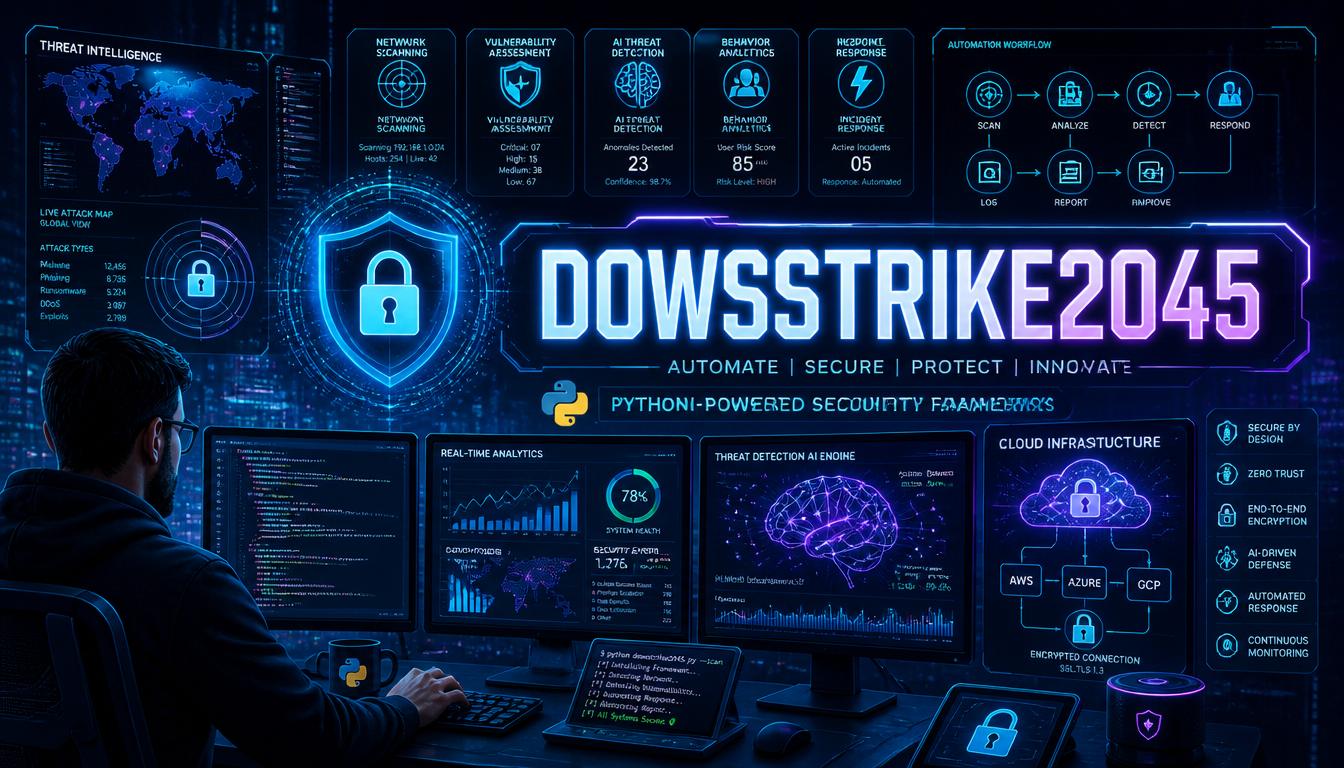
Dowsstrike2045 is commonly described as a Python-powered framework designed to bring together automation, cybersecurity, monitoring, and system management. Instead of using many separate tools, the idea is to provide one environment where users can perform multiple tasks from a single platform.
The concept focuses on making security operations easier and more efficient. In many organizations, teams use one tool for network scanning, another for monitoring, and another for automation. Managing all these tools can become difficult. A unified framework could simplify the process and help teams work faster.
Many online discussions suggest that the framework is built around modular design. This means users can activate only the features they need. For example, a security analyst may only need vulnerability scanning, while a developer may focus on automation and monitoring. The modular approach helps keep systems organized and flexible.
An important point to understand is that there is currently limited public verification regarding an official release. Because of this, many experts view it as a conceptual framework that represents future trends in cybersecurity and automation. Even so, the ideas behind it remain valuable because they reflect what businesses and developers increasingly need in modern technology environments.
Why Is Dowsstrike2045 Getting So Much Attention?
The growing interest comes from the increasing need for smarter security systems. Cyber threats continue to evolve, and organizations need faster ways to identify and respond to risks. Traditional tools often require manual work and constant monitoring, which can consume significant time and resources.
People are also interested because the framework is frequently associated with Python. Python is one of the world’s most popular programming languages due to its simplicity and flexibility. Developers can create automation scripts, machine learning models, web applications, and security tools using Python. Combining these strengths into one platform naturally attracts attention.
Another reason for its popularity is the promise of automation. Businesses want systems that can handle repetitive tasks automatically. For example, a platform could detect suspicious activity and immediately trigger protective actions. This reduces response times and helps prevent larger security incidents.
The discussion around dowsstrike2045 also reflects a larger industry trend. Modern organizations are moving toward integrated solutions rather than managing many disconnected tools. The idea of a single framework that handles scanning, monitoring, reporting, and automation aligns with what many professionals are already looking for in their daily work.
Key Features That Make It Interesting
One of the most discussed aspects is its collection of advanced features. These features are often presented as solutions to common challenges faced by developers, security professionals, and IT teams.
A frequently mentioned capability is network scanning. The framework is said to analyze networks, identify active devices, and detect potential weaknesses. This process helps organizations understand their environments and discover security gaps before attackers can exploit them.
Automation is another major feature. Repetitive tasks can consume valuable time. Automated workflows can perform routine activities such as generating reports, monitoring systems, checking configurations, and responding to alerts. This allows teams to focus on higher-value work instead of manual operations.
Artificial intelligence and machine learning are also commonly associated with the framework. Intelligent monitoring systems can analyze behavior patterns and identify unusual activity. Rather than waiting for human review, the system can provide alerts or even take defensive actions automatically.
Another valuable feature is scalability. As organizations grow, their technology needs become more complex. A scalable framework can support additional users, systems, and workloads without requiring major redesigns. This flexibility makes the concept appealing for both small businesses and large enterprises.
How the Architecture Works
A strong architecture is important for any modern software platform. The structure often described for this framework follows a layered design. This approach separates different functions into organized sections, making the system easier to manage and expand.
The first layer is typically the core engine. This area handles the main operations of the platform. It manages resources, coordinates communication between modules, and ensures that different components work together smoothly. Think of it as the foundation of the entire system.
The second layer focuses on integration. Organizations use many tools and services every day. An integration layer allows the platform to connect with cloud services, databases, monitoring systems, and security applications. This improves efficiency because teams can manage multiple resources from one location.
The final layer is the user interface. Some users prefer command-line tools, while others prefer visual dashboards. A flexible interface allows both options. Technical users can automate tasks through scripts, while less technical users can work through graphical controls and reports.
This layered approach improves maintainability. If one component needs updates, developers can modify it without affecting the entire system. This makes future improvements easier and supports long-term growth.
Real-World Applications and Use Cases
Technology becomes truly valuable when it solves real problems. The ideas associated with dowsstrike2045 can be applied across many industries and situations. These examples help explain why the concept has gained so much attention.
In cybersecurity, security teams could use the platform to monitor networks and identify suspicious behavior. Instead of manually checking logs, automated systems could detect unusual activity and alert administrators immediately. Faster detection often means faster protection.
In business operations, automation can improve productivity. Many organizations spend hours performing repetitive administrative tasks. Automated workflows can handle routine actions such as report generation, data processing, and system maintenance. This saves time and reduces human error.
Healthcare organizations could benefit from intelligent monitoring systems. Hospitals manage large amounts of sensitive information. Automated security checks and continuous monitoring can help protect patient data while ensuring compliance with regulations.
A real-life example can be seen in modern cloud environments. Companies often manage dozens or even hundreds of servers. Instead of monitoring each server manually, automated platforms can track performance, detect issues, and provide recommendations. This reduces workload and improves reliability.
Benefits for Developers and Security Teams
Developers and security professionals often look for solutions that make their jobs easier. The ideas behind this framework offer several advantages that support both productivity and security.
One benefit is simplicity. Working with multiple tools can create complexity. A unified platform allows users to manage different tasks from a single environment. This reduces the learning curve and improves efficiency.
Another advantage is flexibility. Teams can adapt the system to their specific needs. Whether the goal is network monitoring, automation, security testing, or reporting, users can focus on the modules that matter most to them.
Collaboration also becomes easier. When teams use one platform instead of several disconnected systems, communication improves. Developers, security analysts, and operations teams can share information more effectively and respond faster to issues.
An expert insight worth considering is that future security success will depend heavily on automation. Organizations cannot rely solely on manual processes as threats continue to increase. Intelligent systems that combine monitoring, analysis, and automated response will likely become standard across many industries.
Challenges and Important Considerations
Although the concept is exciting, there are also important challenges that users should understand. Every technology solution has limitations, and responsible evaluation is essential before adoption.
One challenge is verification. Many discussions mention features and capabilities, but there is limited public information confirming the existence of an official framework. Users should always verify software sources before installation or deployment.
Performance can also be a consideration. Automation and monitoring systems often process large amounts of information. As workloads increase, organizations may need additional optimization to maintain speed and efficiency.
Security itself is another important factor. Ironically, security tools can become targets if they are not properly maintained. Regular updates, secure configurations, and careful testing remain essential for protecting systems.
Organizations should also think about training requirements. While Python is known for being beginner-friendly, advanced security operations may still require specialized knowledge. Investing in education helps teams use technology effectively and safely.
The Future of Dowsstrike2045 and Modern Security Platforms
Growing Role of Intelligent Automation
Technology is moving toward smarter and more automated systems. Organizations increasingly expect software to identify problems, suggest solutions, and even take action automatically. Therefore, concepts like dowsstrike2045 align closely with future industry needs.
Artificial intelligence will likely play a larger role in security operations. Systems may learn from previous incidents and improve their responses over time. This can reduce reaction times and strengthen defenses against new threats.
Cloud computing will also influence future development. More organizations are moving applications and data to cloud environments. Modern platforms must support cloud-native operations while maintaining strong security controls.
Schließlich, businesses will continue looking for ways to reduce complexity. Unified solutions that combine monitoring, automation, and protection into one platform will remain attractive because they simplify management and improve efficiency.
Emerging Trends to Watch
Several trends may shape the future of integrated security frameworks:
- AI-powered threat detection
- Automated incident response
- Cloud security integration
- Real-time analytics
- Predictive monitoring
- Self-healing infrastructure
- Advanced workflow automation
Außerdem, organizations are becoming more proactive rather than reactive. Instead of waiting for problems to occur, they want systems that identify risks before damage happens.
Daher, frameworks that combine intelligence, automation, and security may become increasingly valuable. The ideas connected to this concept fit well within that larger industry movement.
Safety Tips and Best Practices for Users
How to Evaluate New Security Tools
Whenever a new technology gains attention, users should approach it carefully. Verification is one of the most important steps. Before downloading software, always check for official websites, trusted repositories, and clear documentation.
Reading reviews from experienced professionals can also provide useful insights. Independent evaluations often reveal strengths, weaknesses, and potential risks that marketing materials may not mention.
Testing software in a controlled environment is another smart practice. Many organizations use virtual machines or isolated systems to evaluate tools before deploying them in production environments.
Jedoch, never assume that a tool is safe simply because it appears popular online. Responsible testing and verification help protect systems from unnecessary risks.
Best Practices for Long-Term Success
The following practices can improve security and reliability:
- Keep software updated regularly
- Use strong authentication methods
- Monitor system activity consistently
- Train employees on security awareness
- Backup important data frequently
- Review access permissions regularly
- Test incident response plans
Außerdem, maintaining good security habits often provides greater protection than relying on any single tool. Technology works best when combined with strong processes and informed users.
Schließlich, organizations should focus on continuous improvement. Security is not a one-time project but an ongoing effort that evolves alongside new threats and technologies.
Conclusion
The growing interest in dowsstrike2045 shows how much demand exists for smarter, more integrated technology solutions. The concept brings together ideas from cybersecurity, automation, monitoring, and intelligent workflows into a single vision. Even though many details remain unverified, the discussion highlights important trends shaping the future of technology.
For developers, businesses, and security professionals, the biggest takeaway is the value of automation and integration. Modern organizations need tools that reduce complexity while improving efficiency and protection. Whether this framework becomes a widely adopted platform or simply inspires future innovation, the ideas behind it offer useful lessons for anyone interested in the future of security and automation.
FAQs
Q: What is dowsstrike2045?
A: It is commonly described as a Python-based framework focused on security, automation, and system monitoring.
Q: Is there an official version available?
A: Public information remains limited, so users should verify official sources before downloading anything.
Q: What industries could benefit from it?
A: Cybersecurity, healthcare, finance, cloud computing, and IT operations could all benefit from similar concepts.
Q: Does it support automation?
A: Yes, automation is often described as one of its main strengths.
Q: Why is Python important in this concept?
A: Python offers flexibility, simplicity, and access to a large ecosystem of libraries and tools.
Q: How can users stay safe when exploring new frameworks?
A: Always verify sources, test software in safe environments, and review documentation before installation.