
Table of Contents
What Are Droven io Tech Education Trends?
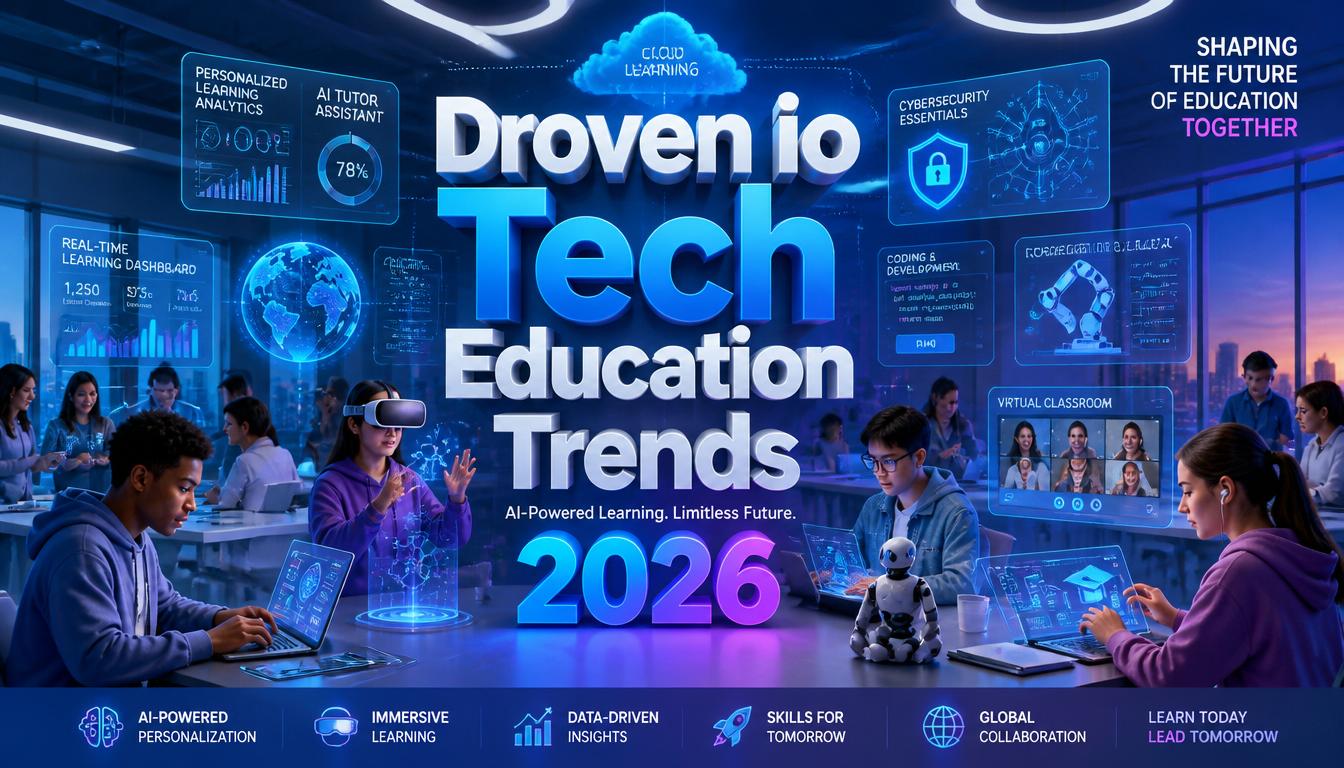
Droven io tech education trends are the latest changes in technology that make learning easier, smarter, and more useful. These trends include artificial intelligence, personalized learning, online classrooms, cloud technology, data analytics, virtual reality, and skills-based education. Together, they help students learn better and prepare for future careers.
Introduction
Education is changing faster than ever before. A few years ago, most students learned only inside a classroom. Today, people can study from almost anywhere using a phone, tablet, or computer. New technology is making learning easier, faster, and more enjoyable for millions of people across the world.
Many schools, colleges, and companies now use smart digital tools every day. Students can watch video lessons, complete online quizzes, and even get help from artificial intelligence. These changes are creating better ways to learn while helping teachers save time and improve lessons.
The rise of droven io tech education trends shows how education is moving toward a more flexible and student-friendly future. Instead of using one learning method for everyone, modern education gives students different ways to learn based on their own needs, goals, and learning speed.
In this guide, you will discover the biggest education technology trends of 2026, why they matter, and how they can help students, teachers, parents, and working professionals build a brighter future.
Why Technology Is Changing Education
Education has always changed with time. Books replaced handwritten notes, computers entered classrooms, and the internet opened access to unlimited knowledge. Today, another big change is happening. Modern technology is helping people learn in ways that were impossible just a few years ago.
Students no longer have to depend only on classroom lessons. They can watch educational videos, join online classes, ask AI tutors questions, and practice skills using interactive websites. This gives learners more freedom to study whenever they have time. Whether someone lives in a large city or a small village, they can now reach high-quality educational resources with an internet connection.
Teachers are also enjoying many benefits. Instead of spending hours checking homework by hand, digital tools can grade quizzes automatically and track student progress. This gives teachers more time to explain difficult topics and support students who need extra help. Better communication between teachers, students, and parents has also become possible through online learning platforms.
Another important reason education is changing is because jobs are changing too. Many companies now want workers who understand technology, solve problems, and keep learning new skills. Employers care about practical knowledge as much as certificates. As a result, schools are adding coding, digital skills, teamwork, and creative thinking to their lessons. This prepares students for careers that may not even exist today.
Experts believe technology will continue improving education over the next decade. However, successful learning will always depend on good teachers, curious students, and useful learning tools working together. Technology should support education, not replace the human connection that makes learning meaningful.
Understanding Droven io Tech Education Trends
The phrase droven io tech education trends describes the newest ideas and technologies shaping education in today’s digital world. These trends focus on making learning more flexible, practical, and useful for people of every age. Schools, universities, businesses, and online learning platforms are all using these ideas to improve education.
Unlike traditional education, modern learning is no longer limited to textbooks and classroom lectures. Students can now learn through videos, live online classes, mobile apps, virtual labs, and interactive exercises. This creates a more exciting learning experience because students can see, hear, and practice what they learn instead of only reading about it.
One important change is the move toward student-centered education. In the past, every student usually learned at the same speed. Today, learning systems can adjust lessons based on each student’s progress. Fast learners can move ahead, while others receive extra practice before continuing. This helps reduce frustration and improves confidence.
Technology is also making education available to more people. A working parent can take evening classes online. A student in a remote village can attend lessons from international teachers. A professional can learn a new technical skill without leaving their job. These opportunities make education more fair and accessible.
An important insight shared by many education experts is that technology works best when it supports human learning instead of replacing teachers. Digital tools provide information quickly, but teachers still guide students, encourage critical thinking, and build confidence. The strongest education systems combine both technology and personal support.
As more organizations invest in digital education, these trends will continue to improve learning quality, reduce barriers, and prepare students for a technology-driven future.
Artificial Intelligence Is Making Learning Smarter
Artificial intelligence, often called AI, has become one of the biggest changes in modern education. Instead of giving every student the same lesson, AI can study how each learner performs and provide help that matches their needs. This makes learning more personal and much more effective.
For example, imagine two students studying mathematics. One student understands multiplication quickly, while another struggles with it. An AI-powered learning platform can give extra practice to the second student while allowing the first student to move to more advanced lessons. This saves time and helps both students learn comfortably at their own pace.
AI also supports teachers in many ways. It can check quizzes automatically, organize assignments, identify students who may need extra help, and provide useful reports about classroom performance. Instead of replacing teachers, AI reduces repetitive work so educators can spend more time teaching and helping students understand difficult ideas.
Many students already use AI tools to ask questions, explain complex topics, practice writing, and prepare for exams. When used responsibly, these tools become valuable learning partners rather than simple answer machines. Students still need to think critically, verify information, and solve problems on their own.
A good real-life example is language learning. Modern AI-powered language apps can listen to pronunciation, correct grammar mistakes, suggest better vocabulary, and create practice exercises based on previous errors. This gives learners immediate feedback that would normally require a personal tutor.
Looking ahead, AI will likely become an even bigger part of education. However, experts agree that students should learn how to use AI wisely. Understanding information, asking good questions, and thinking independently will always remain important skills, even in an AI-powered world.
Personalized Learning Creates Better Results
Personalized learning is one of the biggest changes in modern education. Instead of giving every student the same lesson in the same way, schools and online learning platforms now focus on individual needs. Every student learns at a different speed, so a flexible learning system helps everyone make better progress. This approach improves confidence because students are not forced to keep up with others or wait when they are ready to move ahead.
Technology makes personalized learning much easier than before. Learning platforms can track quiz scores, homework results, and study habits. They use this information to suggest lessons that match each student’s ability. If a learner finds science difficult, the system can offer extra videos, simple exercises, and more practice before introducing harder topics.
Teachers also benefit from personalized learning. Instead of guessing which students need support, they can use reports to understand each learner’s strengths and weaknesses. This allows teachers to spend more time helping students who need extra guidance while encouraging advanced learners to explore new challenges. As a result, classrooms become more balanced and productive.
A real-life example can be seen in online math learning platforms. A student who struggles with fractions may receive step-by-step explanations and extra practice questions. Meanwhile, another student who finishes quickly can begin learning percentages or algebra without waiting for the rest of the class. This keeps both learners interested and motivated.
Another important benefit is that personalized learning reduces stress. Many students feel nervous when they cannot understand a lesson as quickly as others. With flexible learning, there is no pressure to compete with classmates every day. Students can review lessons as many times as they need until they feel confident.
Education experts believe personalized learning creates stronger long-term results because students understand topics more deeply instead of simply memorizing answers for exams. When combined with caring teachers and quality educational resources, this method helps learners become independent thinkers who enjoy learning throughout their lives.
Digital Classrooms Are Growing Around the World
Digital classrooms have become a normal part of education in many countries. Instead of learning only inside a school building, students can now attend classes from home, libraries, or even while traveling. Video conferencing, learning management systems, and online discussion boards have made education more flexible than ever before.
One major reason digital classrooms continue growing is convenience. Students no longer need to travel long distances every day to attend lessons. Working professionals can study after office hours, while parents can continue their education without leaving their families for long periods. This flexibility allows more people to continue learning regardless of their personal situation.
Teachers are also finding new ways to keep students engaged in online classrooms. Live quizzes, group discussions, digital whiteboards, and shared documents help students work together even when they are in different cities or countries. These interactive activities make online learning more interesting than simply watching recorded videos.
The COVID-19 pandemic showed the world that online education could continue even when schools were closed. Since then, many schools have adopted hybrid learning, where students combine classroom teaching with online lessons. This approach gives learners the best parts of both traditional and digital education.
A good example is a university that records every lecture and uploads it to an online portal. Students who miss a class because of illness or personal reasons can watch the lesson later without falling behind. This simple feature improves learning while reducing stress for students.
However, digital classrooms also require reliable internet access and suitable devices. Some families still face challenges because they cannot afford fast internet or modern computers. Governments, schools, and technology companies continue working together to reduce these problems so more students can enjoy equal learning opportunities.
Overall, digital classrooms are making education more flexible, accessible, and inclusive. They are helping millions of learners continue their studies while balancing work, family responsibilities, and personal goals.
Cloud Technology Supports Modern Education
Cloud technology has changed the way schools, colleges, and universities manage education. Instead of storing information only on classroom computers, educational materials are now kept securely online. This allows students and teachers to access lessons, assignments, presentations, and notes from almost anywhere with an internet connection.
One of the biggest advantages of cloud technology is easy access. A student who forgets a notebook at school can still download lesson materials from home. Teachers can update assignments instantly without printing new copies for every student. This saves time, money, and paper while making learning more organized.
Cloud platforms also improve teamwork. Students can work together on the same document even if they live in different places. Group projects become easier because everyone can add ideas, edit files, and leave comments in real time. Teachers can also review work as students complete it and provide immediate feedback.
Another important benefit is data safety. If a laptop breaks or a phone is lost, important school files remain safe because they are stored online instead of only on one device. This reduces the risk of losing homework, research projects, or classroom notes.
A practical example is a teacher who shares weekly science lessons through a cloud platform. Students can watch videos, download worksheets, submit homework, and receive grades from one place. Parents can also monitor progress and communicate with teachers when necessary. This creates stronger cooperation between families and schools.
Experts believe cloud technology will continue supporting education because it allows learning to happen anywhere at any time. As internet services become faster and more affordable, even more schools are expected to adopt cloud-based systems that improve learning for everyone.
Gamification Makes Learning More Fun
Learning becomes easier when students enjoy the process. That is why many schools and online learning platforms now use gamification. Gamification means adding game-like features such as points, badges, levels, rewards, and friendly competitions to educational activities. These simple ideas encourage students to stay interested and complete more lessons.
Many children already enjoy playing games on phones and computers. Educational platforms use this natural interest to make studying more exciting. Instead of seeing homework as a difficult task, students feel motivated to earn rewards, unlock new levels, and improve their scores. This creates a positive learning experience without changing the educational goals.
Teachers also use gamification inside classrooms. They may organize quiz competitions, team challenges, or reward systems that encourage participation. These activities help shy students become more involved while making classroom discussions more enjoyable. Friendly competition often increases confidence and teamwork.
A real-life example is a language-learning app where students earn points every time they complete a lesson correctly. As they continue learning, they unlock new levels and receive achievement badges. These small rewards encourage learners to practice every day, helping them build strong study habits over time.
Gamification also teaches valuable life skills. Students learn to solve problems, work with others, think creatively, and remain patient when facing difficult challenges. These skills are useful not only in school but also in future careers and daily life.
Although rewards are helpful, experts explain that the real goal should always be learning, not simply collecting points. Teachers should use gamification as a way to increase motivation while making sure students truly understand the lessons. When balanced correctly, game-based learning creates happier classrooms and better educational results.
Data Helps Teachers Improve Student Success
Modern education produces valuable information every day. Quiz scores, homework results, attendance records, classroom participation, and learning progress all create useful data. Teachers can study this information to understand how students are learning and where they need extra support.
Instead of waiting until final exams, teachers can now identify learning problems much earlier. If several students perform poorly in one topic, teachers can review the lesson, explain it differently, or provide additional practice before moving to the next chapter. This early support prevents small learning gaps from becoming larger problems.
Data also helps schools improve teaching methods. School leaders can compare student performance across different subjects and identify which learning strategies work best. This allows schools to improve lesson plans, teacher training, and classroom activities based on real evidence instead of guesswork.
A practical example is an online learning platform that tracks student progress every week. If a learner stops completing lessons or scores lower than usual, the system alerts the teacher. The teacher can then speak with the student, understand the problem, and provide extra guidance before the learner falls behind.
In addition, parents benefit from learning data because they receive clear reports about their child’s progress. Instead of only seeing report cards at the end of the school term, they can monitor learning throughout the year and work together with teachers to support their children.
Education experts believe data should always be used carefully and responsibly. Student privacy must be protected, and information should only be used to improve learning rather than create unnecessary pressure. When used in the right way, educational data helps teachers make better decisions and supports every student’s journey toward success.
Virtual Reality and Augmented Reality Are Changing Learning
Virtual Reality (VR) and Augmented Reality (AR) are making education more exciting than ever. Instead of only reading about a topic, students can now experience it in a more realistic way. These technologies help learners understand difficult ideas by showing them through interactive images and virtual environments. As a result, lessons become more interesting and easier to remember.
For example, a history student can take a virtual tour of an ancient city without leaving the classroom. A science student can explore the human body in 3D and learn how each organ works. These experiences help students understand topics much better than reading from a textbook alone. Therefore, many schools are slowly adding VR and AR tools to their learning programs.
Teachers also benefit because these technologies make lessons more engaging. Instead of spending a long time explaining complex ideas, they can show students interactive models and virtual demonstrations. Students become more active during class because they can explore, ask questions, and learn by doing rather than only listening.
A real-life example is medical education. Many medical students now use VR simulations to practice surgeries before working with real patients. This gives them confidence and improves their practical skills in a safe learning environment. Engineering students also use virtual models to study machines and buildings before creating real projects.
Although VR and AR equipment can still be expensive, prices are becoming lower each year. More schools and colleges are expected to adopt these tools as technology continues improving. Overall, immersive learning is helping students gain deeper knowledge while making education more enjoyable and practical.
Skills-Based Learning Is Becoming More Important
Today’s employers want people who can solve problems and perform real tasks. Because of this, schools and training centers are focusing more on skills-based education instead of only teaching theory. Students still learn important concepts, but they also practice using those ideas in real situations.
Skills-based learning prepares students for modern careers. Instead of memorizing information only for exams, learners complete projects, solve challenges, and build useful portfolios. This helps them show employers what they can actually do. As a result, many companies now value practical experience alongside traditional qualifications.
A simple example is learning computer programming. Rather than only reading about coding, students create websites, mobile apps, or software projects. These projects become proof of their abilities when applying for jobs. In addition, students gain confidence because they see the results of their hard work.
Many schools are also adding communication, teamwork, leadership, and critical thinking to their lessons. These soft skills are important because every workplace requires people to work well with others. Technical knowledge alone is no longer enough for long-term career success.
Experts believe students should keep learning even after finishing school. Technology changes quickly, so learning new skills throughout life helps people stay competitive and ready for future opportunities. Overall, skills-based education prepares learners not only for their first job but also for lifelong success.
Challenges and the Future of Education Technology
Understanding Today’s Challenges
Technology offers many benefits, but it also brings some challenges. Droven io tech education trends show that schools must solve these problems to create equal learning opportunities for everyone. However, the good news is that many organizations are already working on practical solutions.
Some of the biggest challenges include:
- Limited internet access in some areas
- High cost of digital devices
- Online privacy and cybersecurity risks
- Too much screen time for students
- Teacher training for new technologies
In addition, schools must ensure that technology supports learning instead of becoming a distraction. Teachers play an important role in helping students use digital tools wisely. Parents also need to guide children in balancing online learning with healthy daily activities.
One expert insight is that successful schools do not simply buy the newest technology. Instead, they train teachers, create clear learning goals, and choose tools that genuinely improve education. Technology alone cannot create better learning without good planning.
What the Future Looks Like
The future of education looks bright as technology continues to improve. Also, artificial intelligence will become even smarter, helping students receive faster feedback and more personalized lessons. Virtual classrooms will become more interactive, allowing learners from different countries to study together.
On the other hand, educators must continue teaching important human skills such as creativity, teamwork, communication, and ethical decision-making. These abilities cannot be replaced by machines.
As a result, future classrooms will combine technology with human guidance. Students will enjoy flexible learning while teachers continue inspiring curiosity and critical thinking.
Finally, the biggest goal is not simply using more technology but helping every learner reach their full potential regardless of where they live or how they learn.
Final Thoughts on Droven io Tech Education Trends
Key Takeaways for Students and Teachers
The growth of droven io tech education trends shows that learning is becoming smarter, more flexible, and more accessible for everyone. Overall, students now have more opportunities than ever before to learn new skills through online platforms, artificial intelligence, cloud technology, and interactive digital tools. These innovations help learners study at their own pace while preparing for future careers.
Teachers also have better resources to support students and improve classroom learning. Therefore, education is no longer limited to one building or one teaching style. The best results come when technology and skilled teachers work together to create meaningful learning experiences that build confidence and lifelong curiosity.
Looking Ahead
Technology will continue changing education, but the main goal will always remain the same—helping people learn, grow, and succeed. In addition, students should focus on developing practical skills, staying curious, and embracing lifelong learning because the world continues changing every year.
Whether you are a student, teacher, parent, or working professional, understanding these trends can help you make better learning choices. By using technology wisely and continuing to build new skills, you can stay prepared for the opportunities of tomorrow.
Frequently Asked Questions
Q: What are droven io tech education trends?
A: They are the latest technology developments that improve education through AI, digital learning, cloud computing, personalized lessons, and practical skill development.
Q: Why is AI important in education?
A: AI provides personalized learning, quick feedback, and helps teachers save time on routine tasks.
Q: How do digital classrooms help students?
A: They allow students to learn from anywhere, attend online lessons, and access study materials whenever they need them.
Q: What is skills-based learning?
A: Skills-based learning focuses on practical abilities, real projects, and workplace skills instead of only theoretical knowledge.
Q: How do VR and AR improve learning?
A: They create interactive learning experiences that help students understand complex topics through virtual simulations and visual models.
Q: What is the future of education technology?
A: The future includes smarter AI tools, personalized education, immersive learning, stronger online collaboration, and lifelong skill development that prepares learners for modern careers.